
Validation
The gentle violence of needing to be proven right

This essay was written as part of a collaborative exercise with fellow writers in the Delhi NCR Substack group. Links to their essays are at the end of the article.
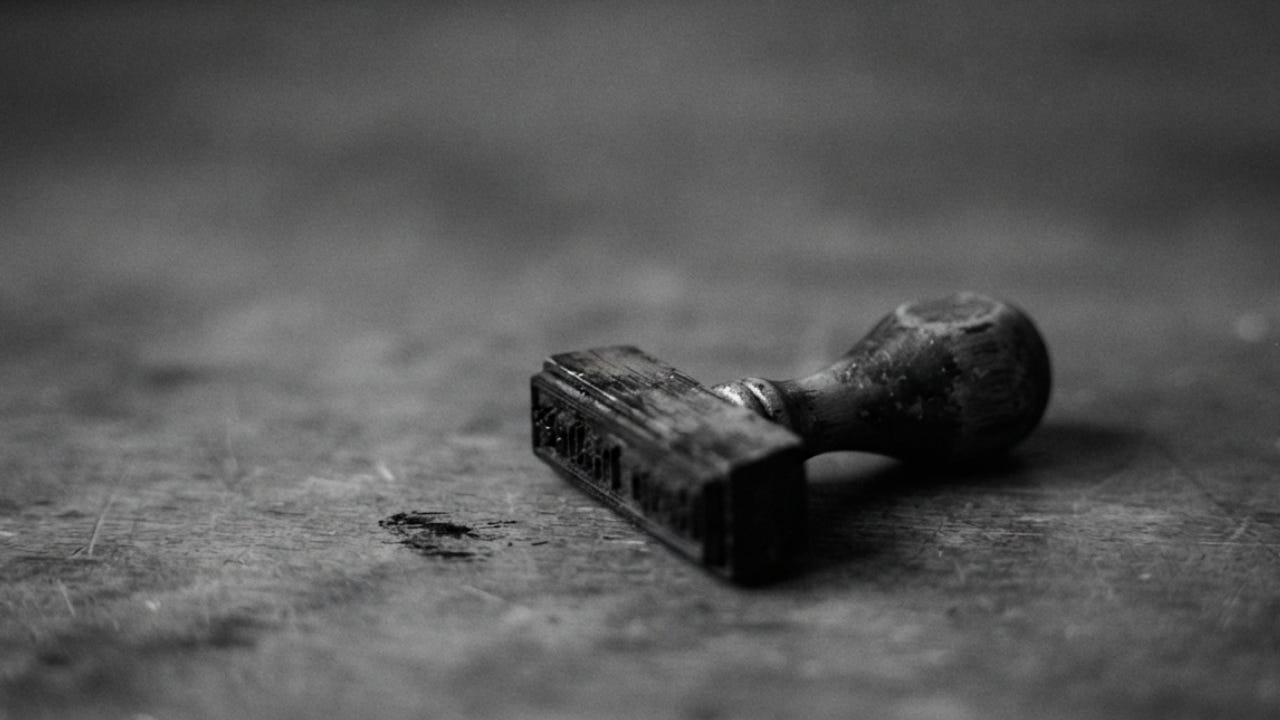
An engineer validates a system by checking if it performs its intended function. A shopping mall validates your parking ticket by stamping it. A therapist validates a feeling by telling you it makes sense, which is not the same as telling you it’s correct. A pharmaceutical line validates a process by proving it produces the same pill to the same tolerance ten million times in a row.
Four industries, one word, and the same mechanism in every case: a device for certifying that a thing is real, and that it’s allowed.
Notice what all four have in common. The stamp is issued once, and then it’s done. The parking ticket does not need to be re-stamped the next morning. Once the process validates it, the pill remains validated. The certificate goes in a drawer and holds.
There is one validation machine that never issues a final stamp, and it is the one we spend our whole lives feeding. It runs on other people. It certifies that we are real and allowed, and its certificate expires overnight. The thing has to be sought again at breakfast, from anyone who will supply it. A colleague, a parent, a stranger with a phone, the same reader who liked yesterday’s thing and owes us nothing today.
I can watch it in myself with little effort. I notice how my essays perform. There is a number, and I know where to find it, and I have looked at it more times than I can count. I know better, and I look anyway. The only defense I’ve built is a private and rather convenient belief that the piece which does poorly today is the one some stranger will find in a decade and call the best thing on here. It’s a lovely thought, and also validation ordered in for later delivery. It’s the same hunger wearing a longer coat and pretending the wait makes it noble.
That’s the ordinary kind, the reaching outward for a stamp. It’s the version everyone will admit to with a rueful smile, because wanting to be liked is embarrassing but forgivable.
There is another kind, and nobody admits to it because it’s uglier and it wears the face of being reasonable.
It is the need to be proven right.
Watch what has to happen for that need to be met. Someone or something has to be wrong. The proof arrives in the form of a failure, which means a small part of the person waiting for it was on the failure's side the whole time. “See, I told you” is a sentence that requires a wreck to be spoken over. And it is spoken, in most families, several times a week, in the tone of someone who loves you.
My mother always worried. She worried about my siblings and me the way other mothers cooked, as the daily proof she was doing the job. She offered her worry as love. It was love, and it was also a bid: worry now, so that later, whatever goes wrong, she had seen it coming. When we grew up and stopped providing enough occasions, she shifted the worry to the grandchildren, because the machine needed feeding and they were the fresh supply. I don’t think she ever knew she was doing it. That’s the thing about this hunger. It runs in the dark, wearing the cape of care, and the person carrying it feels only the warmth of having meant well.
I had a relative who did the sharper version. He would argue hard and early against whatever the family was planning. If the plan went ahead and then went sideways, you could see the satisfied settling, the almost-invisible glow. Glad the world had arranged itself to confirm his reading of it. He filed an objection and reality stamped it. The kick is real.
It would be comfortable to leave it there, but the machine points not only outward, and this is the part I’ve had to sit with.
Years ago I lost a good deal of money. Some of it was owed and never came; some of it I handed to terrible investments myself. And somewhere under the accounting, a belief got laid down: that money, once made, leaves and the good thing gets taken.
I did not complain about the belief. I did something worse. I proved it. For years afterward, when something promising came near, I found reasons. I stood back from good opportunities, and I could give you the sensible-sounding case for each one. And at other times I walked, clear-eyed and willing, into the ones that were visibly going to fail. The part of me running the show wasn’t trying to succeed. It was collecting evidence. Every loss that arrived on schedule was another stamp on a certificate: see, I told you, it always goes.
That is the same sentence my relative said over the failed family plan. I was saying it to myself, about myself, and arranging the failure so I’d get to say it.
There is a version of this essay that ends by telling you to validate yourself from within, to stop needing the stamp, and to become calm and centered. I don’t believe it, and I’ve met enough people selling it to distrust the ones who claim they’ve bought it. The reflex doesn’t die. You will feel the small ugly relief the next time someone’s plan collapses the way you said it would, and you will feel it about your own collapses too, that grim little “knew it” that is almost comfortable because at least you were right.
The most you get, I think, is a half-second of lag. You notice the relief as it arrives; you see it for what it is, and you are slower to enjoy it. You catch yourself rooting for the wreck, and you’re a little ashamed, which is not the same as being cured but is the only honest place to stand.
Everyone chases validation and calls it something nicer. Its ugliest form is the relief of being proven right, which requires someone to fail. And the person you most often need to fail is yourself.
Honest piece Sid. Dil se dil pe lag gayi
Hard hitting, makes you feel ashamed of the times we had, that ... that half second of perverse pleasure of having proved right.
Worry +love+Pessimism=Need for respect /validation/acknowledgement